 MOVING MATTERS
EUROPEAN PERFORMING ARTS DEVELOPMENT PROGRAM IN NON-URBAN AREAS (2024-2026)
CO-FUNDED BY THE EUROPEAN UNION – CREATIVE EUROPE
Moving Matters was a two-year international cooperation project co-funded by the Creative Europe Programme of the European Commission, Bodø2024 European Capital of Culture, Vestvågøy Kommune and the Norwegian Arts Council. The project was led by Eilertsen & Granados Teaterkompani in collaboration with partners from Serbia (Nyári Mozi Theater Community), Spain (Laboratorio de Artes Vivas y Ciudadanía – TenerifeLAV) and Ireland (The Non Prophet Organisation).
Between 2024 and 2026, Moving Matters created a transnational platform for artistic mobility, mentorship and site-specific performance development, connecting emerging artists with established mentors across diverse cultural landscapes. Through residencies, workshops, public presentations and international exchanges, the project explored how movement, landscape and lived experience shape contemporary performance practice.
Kelebia, Serbia
May–June 2024
Workshop and Co-Creation Residency
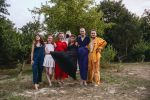
The first major residency took place in Kelebia, Serbia, where six young artists gathered for an intensive three-week process dedicated to landscape, dramaturgy and the body.
Hosted by Nyári Mozi Theater Community, the residency unfolded in direct dialogue with nature. Known for extending the boundaries of performance beyond conventional theatre spaces, Nyári Mozi works site-specifically, often transforming entire towns and landscapes into performative environments. Many participants came from rural areas, bringing with them a deep sensitivity to local cultural and natural contexts.
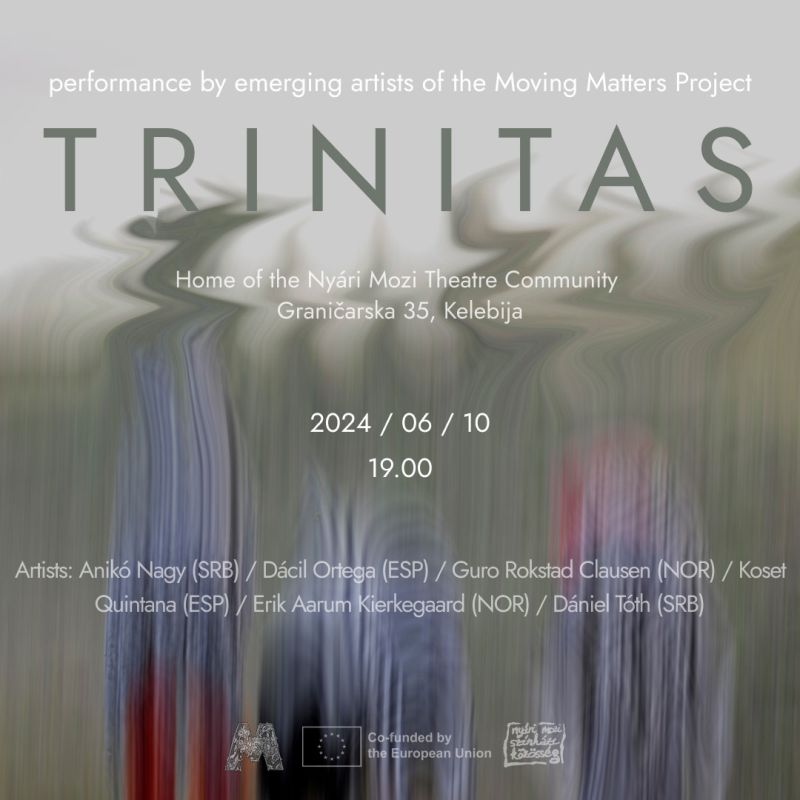
Co-Creation Outcome: Trinitas
The residency resulted in the development of the site-specific performance Trinitas. The work emerged through collective experimentation and personal exploration. Each performer worked with their own stories, memories and mythologies, stepping beyond familiar artistic and personal territories.
The creative research focused on the interplay between the organic, repetitive functioning of the human body and the ever-changing pulse of the natural world. The performers investigated the body as a living map, a membrane through which we physically and emotionally connect with both animate and inanimate elements. Through continuous observation, improvisation and reflection, personal movement vocabularies evolved into solo and group etudes, gradually forming an “organic system” of choreography.
The process examined the trinity of human existence: physical, mental and emotional. By strengthening awareness across these dimensions, the performers developed a stage presence rooted in attentiveness, vulnerability and connection. Guest artists from various disciplines contributed to the residency, expanding the research through interdisciplinary exchange.
Beyond the performance itself, the residency delivered:
• A structured mentorship model connecting emerging artists with international mentors
• A site-specific creation methodology adaptable to rural contexts
• A documented creative process contributing to the project’s knowledge-sharing outputs
• Strengthened international collaboration among partner organisations
Artistic Development within Mentorship Process
Moving Matters placed strong emphasis on nurturing individual artistic voices as a central pillar of the project. During the residency period, emerging artists developed their solo works under the guidance of experienced mentors, engaging in continuous dialogue, writing laboratories and in-depth movement research. Through this sustained process, they shaped deeply personal performances that premiered in work-in-progress formats before continuing their journey within the project’s international framework.

Nagy Anikó: Born to Give Birth
To give birth. To be born. To be reborn.
Anikó Nagy’s solo performance Born to Give Birth is an intimate poetic journey through emotions, memories, and transformation. This piece comes from her long relationship with poetry as both a refuge and a form of resistance. Each emotional state takes on a different artistic expression. When sadness hits, she reads poems. When anger surfaces, she performs them. When joy overtakes her, she dances. When fear clouds her view of the world, she draws. In this performance, the drawings are not just decorative; they serve as active companions. They guide the performer through a symbolic maze made of uncertainty, fragility, and shared anxiety. The stage becomes a space for vulnerability, inviting the audience into a delicate yet strong community. The performance combines selected poems into a unified structure, presented in Hungarian and English. It looks at the intersection of poetry and theatre, exploring how text comes to life and how personal memories turn into collective experiences. Born to Give Birth addresses renewal as a daily act of survival. It encourages the audience to pause, close their eyes, and imagine waking up in freedom. The work showcases the power of art as a source of spiritual support and as a way to reinvent oneself in unstable times.

Tóth Dániel: Why Is It Important to Be in Movement?
Movement appears as survival. Movement appears as resistance. Movement appears as art.
Tóth Dániel’s monodrama Why Is It Important to Be in Movement? is a raw, uncompromising solo performance about movement in all its dimensions: physical, emotional, social and artistic. On an empty stage, a single body carries the weight of two years of travel, artistic exchange, absurd realities and fragile hopes. The performance is not just a presentation of experiences from the Moving Matters project. It is a confession, a cry and a mirror held up to the independent art scene and contemporary society. Through autobiographical texts, developed with mentors and refined through practices like automatic writing, Dániel builds a performance language that moves between irony and vulnerability. Humor becomes a tool for confronting discomfort. Stillness is as meaningful as motion. The audience is not a passive observer. They are drawn into an emotional rollercoaster shaped by cultural differences, artistic precarity and personal confrontation. The piece asks urgent questions: What does it mean to keep moving when there is nowhere to go? When there is no clear reason and no one waiting at the destination? If you have ever felt the need to move but did not know how, this performance speaks directly to you.
From Residency to Stage
Both solo productions originated from the Kelebia residency and continued through a structured mentorship program, development meetings every week, and a final preparation period at the Kosztolányi Dezs? Theater in Subotica. The closed presentation of the work represented the culmination of the Serbian part of the project before the artists set off for Norway to continue the international exchange. These performances represent some of the most important artistic outcomes of the Moving Matters project. They illustrate the project’s dedication to supporting independent voices, decentralizing artistic production, and establishing sustainable networks for young artists across international borders. Moving Matters has achieved more than just the creation of performances through its research and collaboration based on landscapes. It has established artistic resilience, new methodologies, and international networks that will extend beyond the project’s lifetime.
Project Impact and Legacy
Over two years, Moving Matters grew into a dynamic international platform connecting artists, mentors and organisations across Serbia, Norway, Spain and Ireland. What began as residencies evolved into lasting collaborations, new works and new ways of working.
The project enabled meaningful international mobility for emerging artists and resulted in original site-specific performances and powerful solo works that continue to travel beyond the project itself. By placing creation in rural and peripheral landscapes, Moving Matters strengthened decentralised cultural production and demonstrated that innovation does not depend on major urban centres.
Key outcomes include:
• New internationally developed performance works
• A practical and transferable mentorship model
• Cross-border artistic exchange across four countries
• Public presentations and work-in-progress showings
• Documented methodologies supporting long-term sustainability
Moving Matters affirmed movement as artistic language and as a human necessity. The performances created were not simply staged events, but lived encounters shaped by place, collaboration and shared experience. Its legacy continues through the artists, partnerships and creative methods it set in motion.




through time exibiton (12 picture) »